Thought for the day

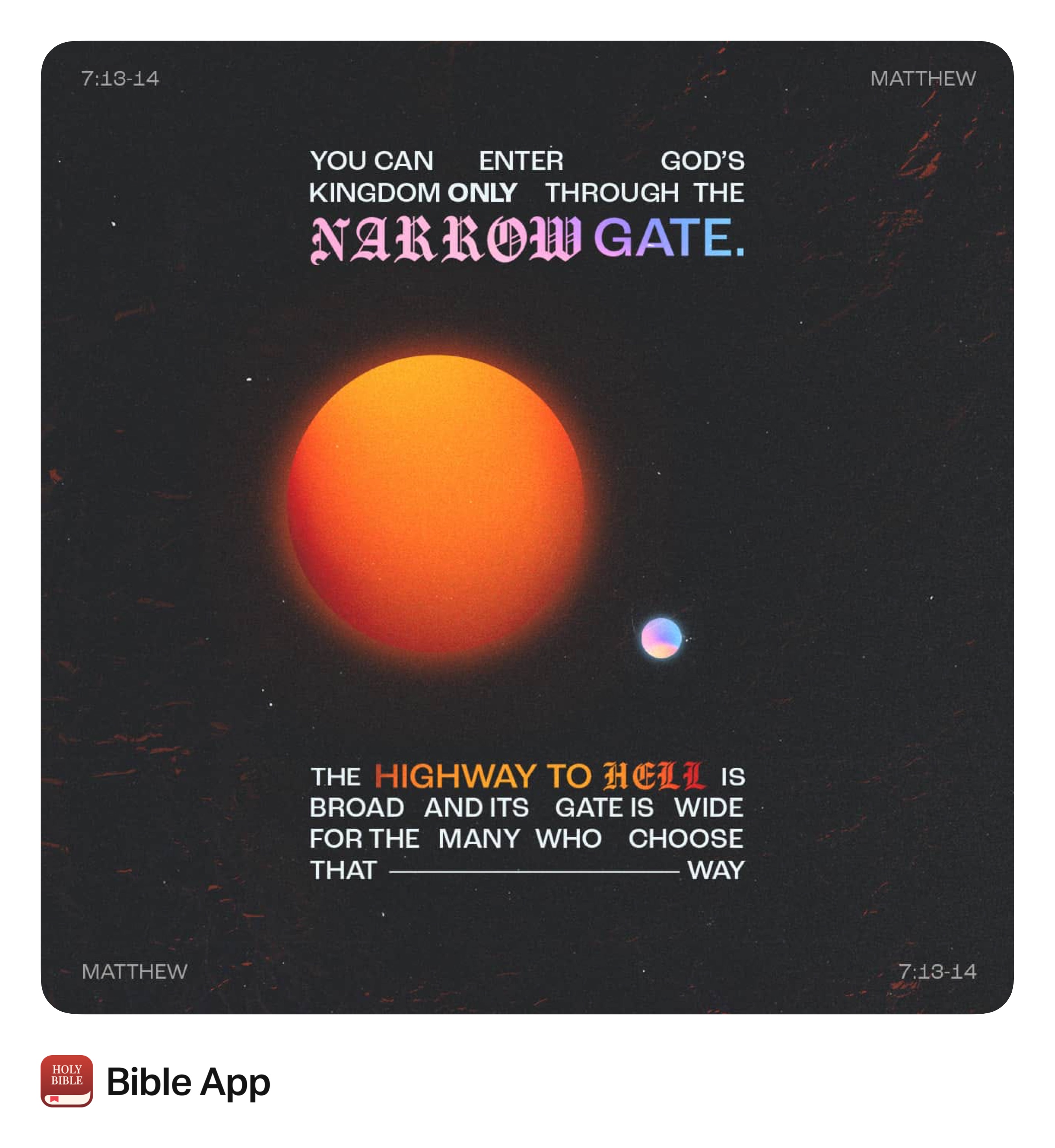
7:13, 14 Both the narrow gate and the wide gate are assumed to provide the entrance to God’s kingdom. Two ways are offered to people. The narrow gate is by faith, only through Christ, constricted and precise. It represents true salvation in God’s way that leads to life eternal. The wide gate includes all religions of works and self-righteousness, with no single way (cf. Ac 4:12), but it leads to hell, not heaven. † 7:14 way is narrow. Christ continually emphasized the difficulty of following Him (10:38; 16:24, 25; Jn 15:18, 19; 16:1–3; cf. Ac 14:22). Salvation is by grace alone, but is not easy. It calls for knowledge of the truth, repentance, submission to Christ as Lord, and a willingness to obey His will and Word. See notes on 19:16–28. † 7:15 false prophets. These deceive not by disguising themselves as sheep, but by impersonating true shepherds. They promote the wide gate and the wide way. sheep’s clothing. This may refer to the woolen attire that was the characteristic garb of a shepherd. † 7:16 You will know them by their fruits. See note on 3:8. False doctrine cannot restrain the flesh, so false prophets manifest wickedness. Cf. 2Pe 2:12–22. † 7:21 Not everyone who says … but he who does. The barrenness of this sort of faith demonstrates its real character (cf. v. 20)—the faith that says but does not do is really unbelief. Jesus was not suggesting that works are meritorious for salvation, but that true faith will not fail to produce the fruit of good works. This is precisely the point of Jas 1:22–25; 2:26.


Discipleship is great, but Paul encourages the Philippians to take ownership of their own walk with Jesus, even when Paul is not there. When we take ownership, we are walking with Jesus and his Spirit and then, we are to do the same as Paul, by walking with others, and pointing them to Jesus, that they would do the same. That way, we are participating in building Gods kingdom, here on earth. Is that not a beautiful way to see what gods will is in our life?
The Battle belongs to the Lord
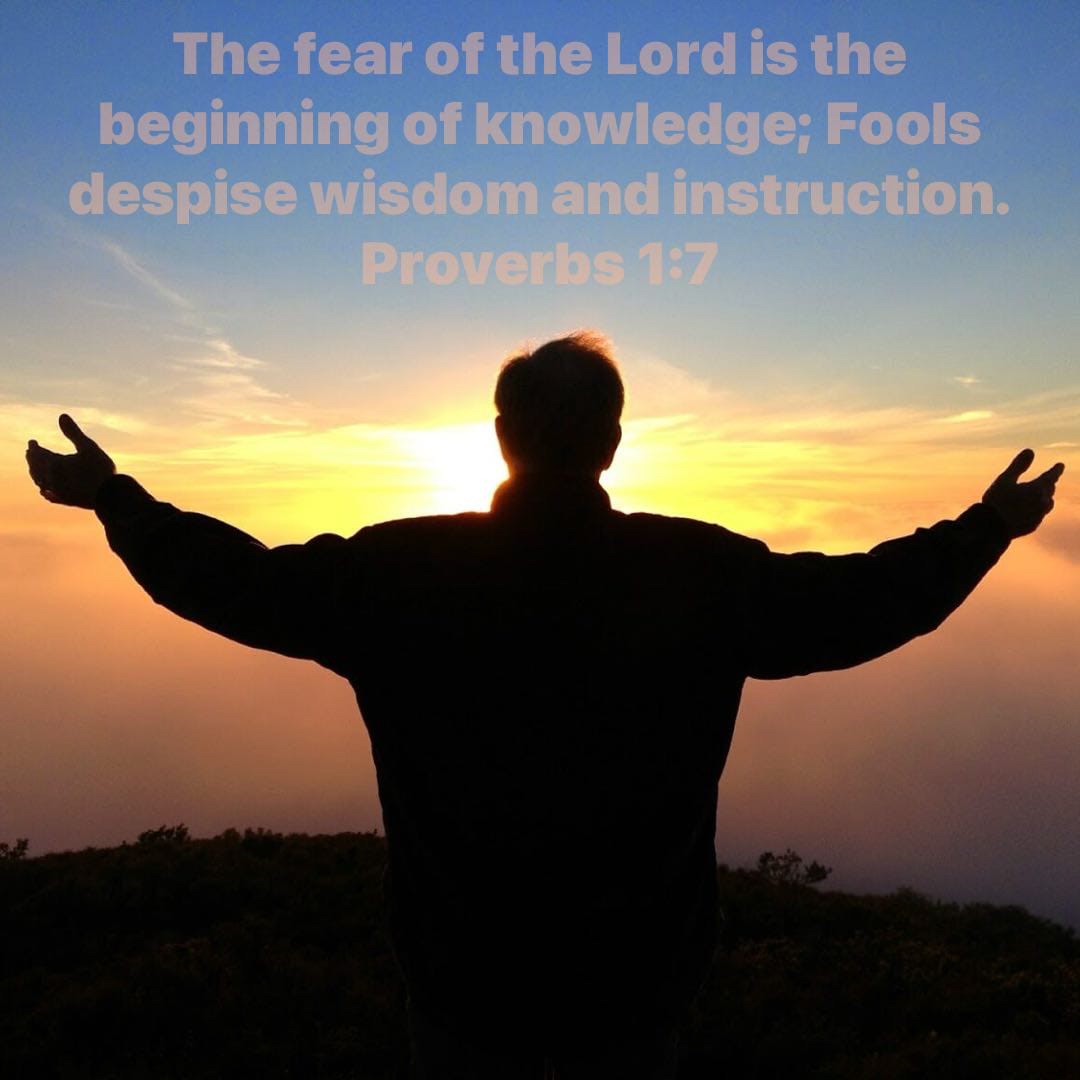
1:7 The fear of the LORD.
The overarching theme of this book and particularly the first 9 chapters is introduced—reverence for God (see v. 29; 2:5; 3:7; 8:13; 9:10; 14:26, 27; cf. also Job 28:28; Ps 34:11; Ac 9:31).
This reverential awe and admiring, submissive fear is foundational for all spiritual knowledge and wisdom (cf. 2:4–6; 9:10; 15:33; Job 28:28; Ps 111:10; Ecc 12:13).
While the unbeliever may make statements about life and truth, he does not have true or ultimate knowledge until he is in a redemptive relationship of reverential awe with God.
Note the progression here:
1) teaching about God;
2) learning about God;
3) fearing God;
4) knowing God; and
5) imitating God’s wisdom.
The fear of the Lord is a state of mind in which one’s own attitudes, will, feelings, deeds, and goals are exchanged for God’s (cf. Ps 42:1).

In this book, Nahum portrays the downfall of Nineveh and Assyria as an image of how God will confront and bring down all violent human empires.


 Living Waters