“He restores my soul; He guides me in the paths of righteousness For His name’s sake.”
Psalms 23:3 NASB1995




“He restores my soul; He guides me in the paths of righteousness For His name’s sake.”
Psalms 23:3 NASB1995

 bible.com/bible/100/mat.11.28.NASB1995
Jesus, you care so much for us, that you gave your life for me and for others. As unworthy as we were, you took the penalty for our sins, that we might live. All you ask, is that we believe, by walking in faith. Thank you, Jesus.

 bible.com/bible/100/psa.103.13.NASB1995

 bible.com/bible/100/1th.5.15.NASB1995
John MacArthur Study Bible
We urge you. Paul has discussed how the pastors are to serve the people and how the people are to respond to the pastors (vv. 12, 13). In these verses, he presents how the people are to treat each other in the fellowship of the church. The “unruly,” those out of line, must be warned and taught to get back in line. The “fainthearted,” those in fear and doubt, must be encouraged and made bold. The “weak,” those without spiritual and moral strength, must be held up firmly. Patience, forgiveness, and acts of goodness must prevail among all the people. † 5:16–22 Paul gave a summary of the Christian’s virtues. These verses provide the foundational principles for a sound spiritual life in brief, staccato statements that, in spite of their brevity, give believers the priorities for successful Christian living.

From: John MacArthur Study Bible.
Vs 7emptied Himself. From this Gr. word comes the theological word “kenosis”; i.e., the doctrine of Christ’s self-emptying in His incarnation. This was a self-renunciation, not an emptying Himself of deity nor an exchange of deity for humanity (see notes on v. 6).
Jesus did, however, renounce or set aside His privileges in several areas:
1) heavenly glory—while on earth He gave up the glory of a face-to-face relationship with God and the continuous outward display and personal enjoyment of that glory (cf. Jn 17:5);
2) independent authority—during His incarnation Christ completely submitted Himself to the will of His Father (see note on v. 8; cf. Mt 26:39; Jn 5:30; Heb 5:8);
3) divine prerogatives—He set aside the voluntary display of His divine attributes and submitted Himself to the Spirit’s direction (cf. Mt 24:36; Jn 1:45–49);
4) eternal riches—while on earth Christ was poor and owned very little (cf. 2Co 8:9); and
5) a favorable relationship with God—He felt the Father’s wrath for human sin while on the cross (cf. Mt 27:46; see note on 2Co 5:21). form of a bond-servant. Again, Paul uses the Gr. word “form,” which indicates exact essence (see note on v.
6). As a true servant, Jesus submissively did the will of His Father (cf. Is 52:13, 14). the likeness of men. Christ became more than God in a human body, but He took on all the essential attributes of humanity (Lk 2:52; Gal 4:4; Col 1:22), even to the extent that He identified with basic human needs and weaknesses (cf. Heb 2:14, 17; 4:15). He became the God-Man: fully God and fully man.

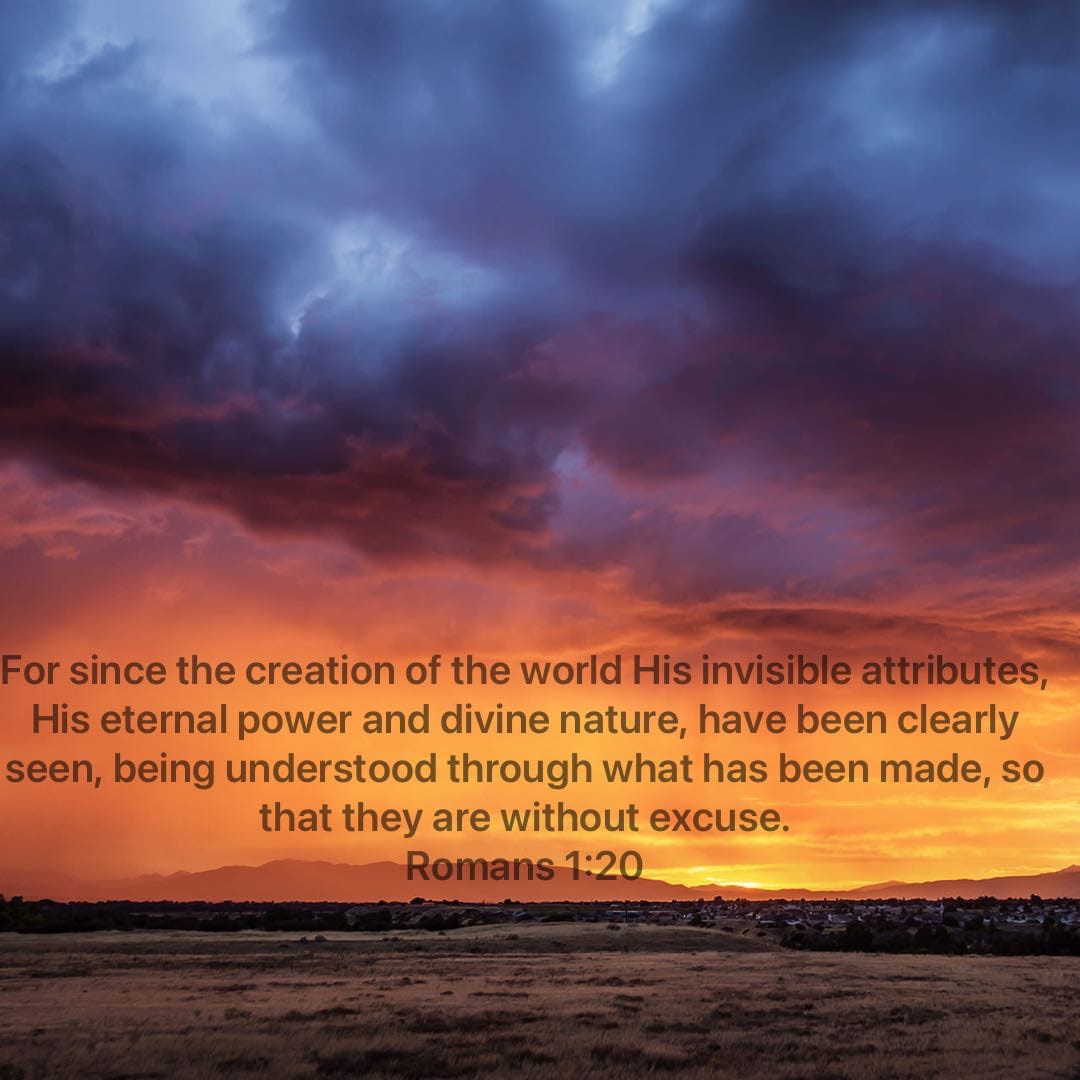 bible.com/bible/100/rom.1.20.NASB1995
WITHOUT EXCUSE……..”COME TO JESUS, ALL YOU WHO ARE HEAVY LADEN, AND HE WILL GIVE YOU REST”, HE SAID. If you don’t know how to do this, the answer is simple. Jesus said, “pick up your cross, and follow him”. Believe in Faith, that he, Son of God, gave himself, to die for us, in our unrighteousness, that we might become righteousness before God.

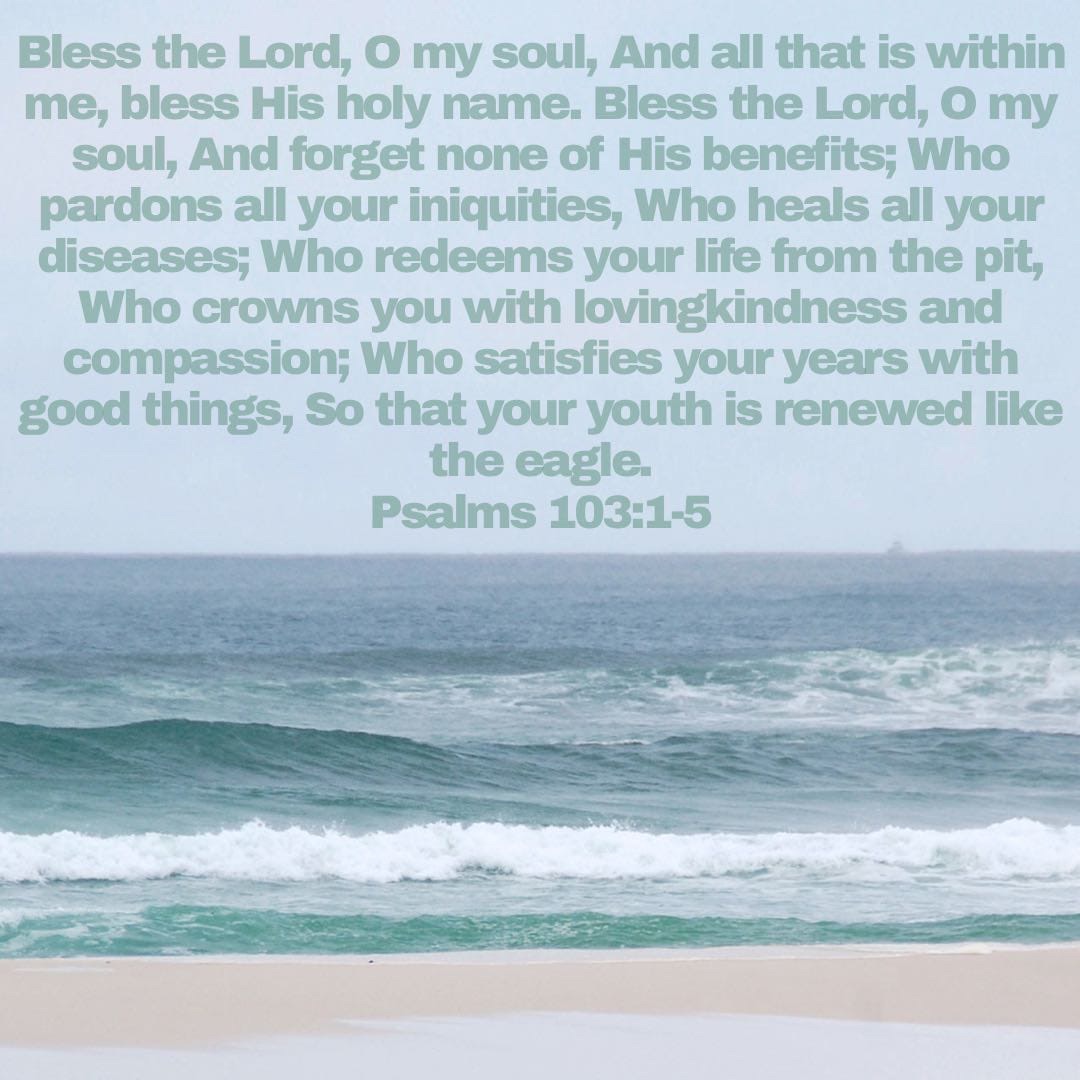 bible.com/bible/100/psa.103.1-5.NASB1995
Father, you are my, hope, my life, my salvation. All that I am, comes from your loving kindness. It is you that I put my Trust and Faith in. I can be right with you through Faith alone, through you Grace alone, from your Son, who was fully Man, and fully God. Because of his sacrifice on the cross, and his conquering death, I can live, not only now, but with you and him, for all of eternity. May it never get old, to remember and share this Good News, to my family, my friends, and to the ends of the earth. Thank You Jesus !Amen!

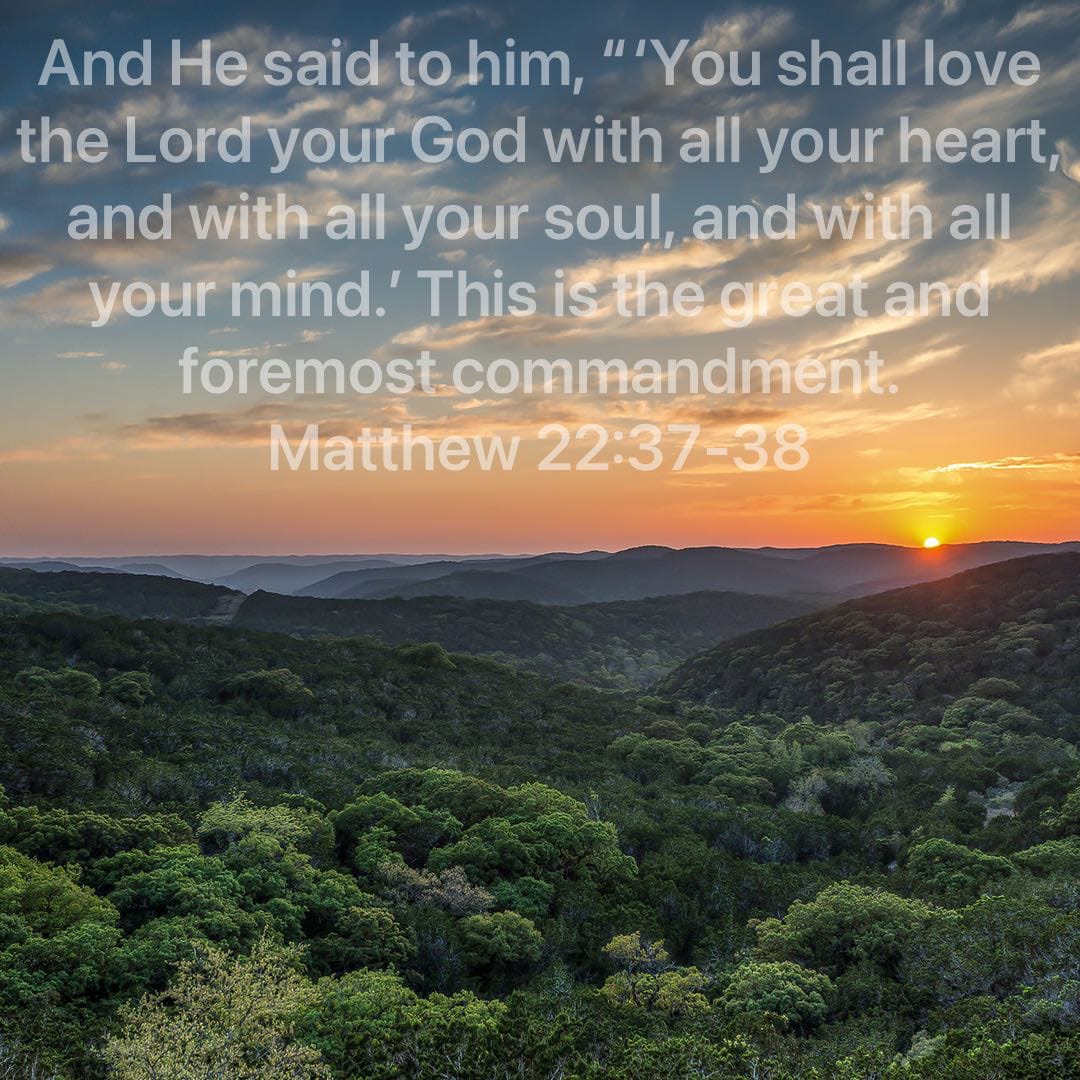 bible.com/bible/100/mat.22.37-38.NASB1995
From Rick Warrens book, “The Purpose Driven Life”

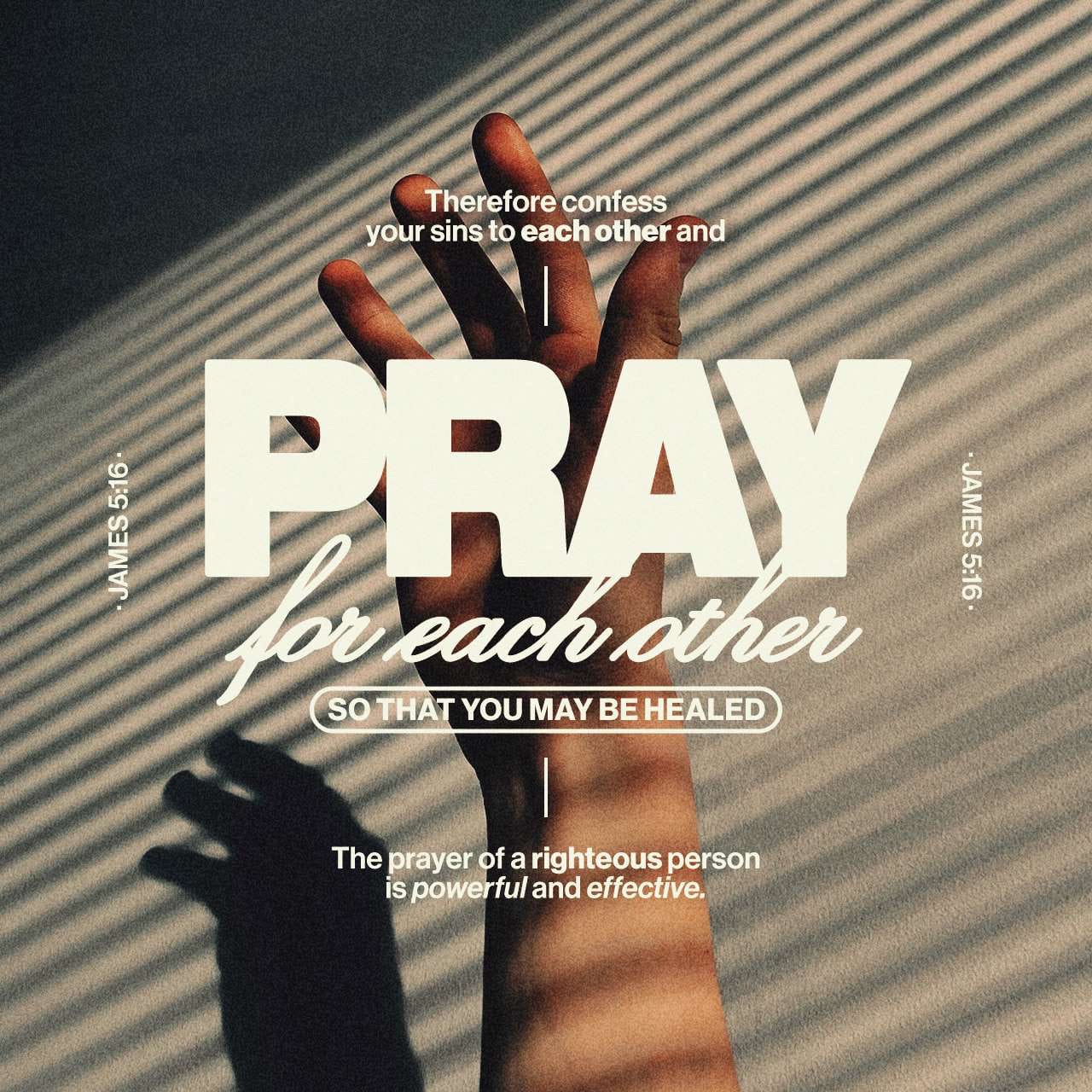 bible.com/bible/100/jas.5.16.NASB1995
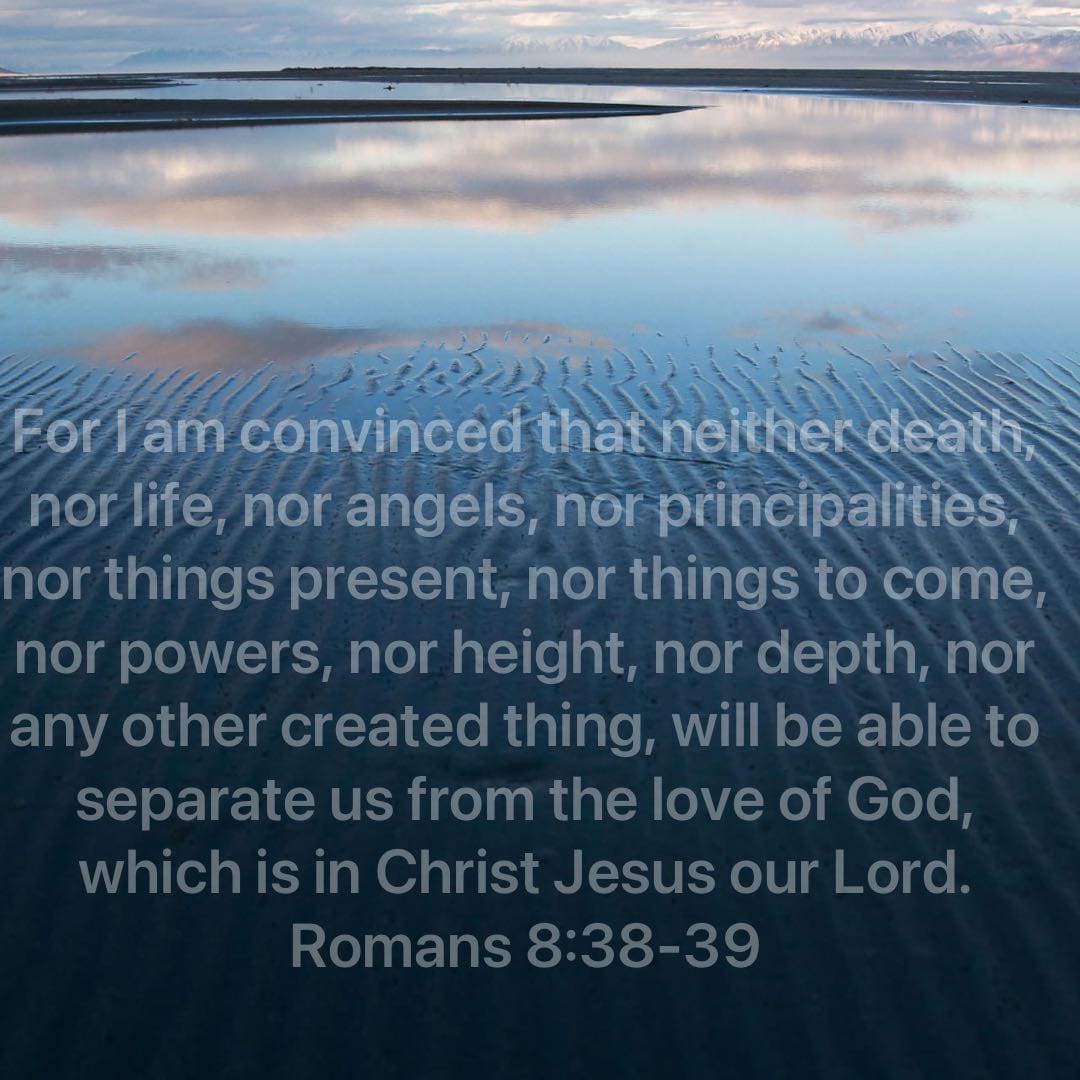 bible.com/bible/100/rom.8.38-39.NASB1995
 Living Waters