Father, my heart is sinful and selfish. You have already shown me, the depths of your compassion, and yet this verse creates tension in my heart to do good to my enemies. I cannot do this without your Holy Spirit and your working together in me. Help me continue to grow, in this area. Amen.
“I will put My Spirit within you and cause you to walk in My statutes, and you will be careful to observe My ordinances.” Ezekiel 36:27 NASB1995 https://bible.com/bible/100/ezk.36.27.NASB1995
Father, just as David looked back at Israel’s deliverance from oppression, and looked forward to the coming messiah, we as Christians look back at our deliverance from sin by Jesus death and resurrection, and look forward to his second coming. May the Good News of deliverance to all who believe, go out to every living soul. May their faith in Jesus, transform them into the people you want them to be.
“Whatever you do, do your work heartily, as for the Lord rather than for men, knowing that from the Lord you will receive the reward of the inheritance. It is the Lord Christ whom you serve.” Colossians 3:23-24 NASB1995 https://bible.com/bible/100/col.3.23-24.NASB1995
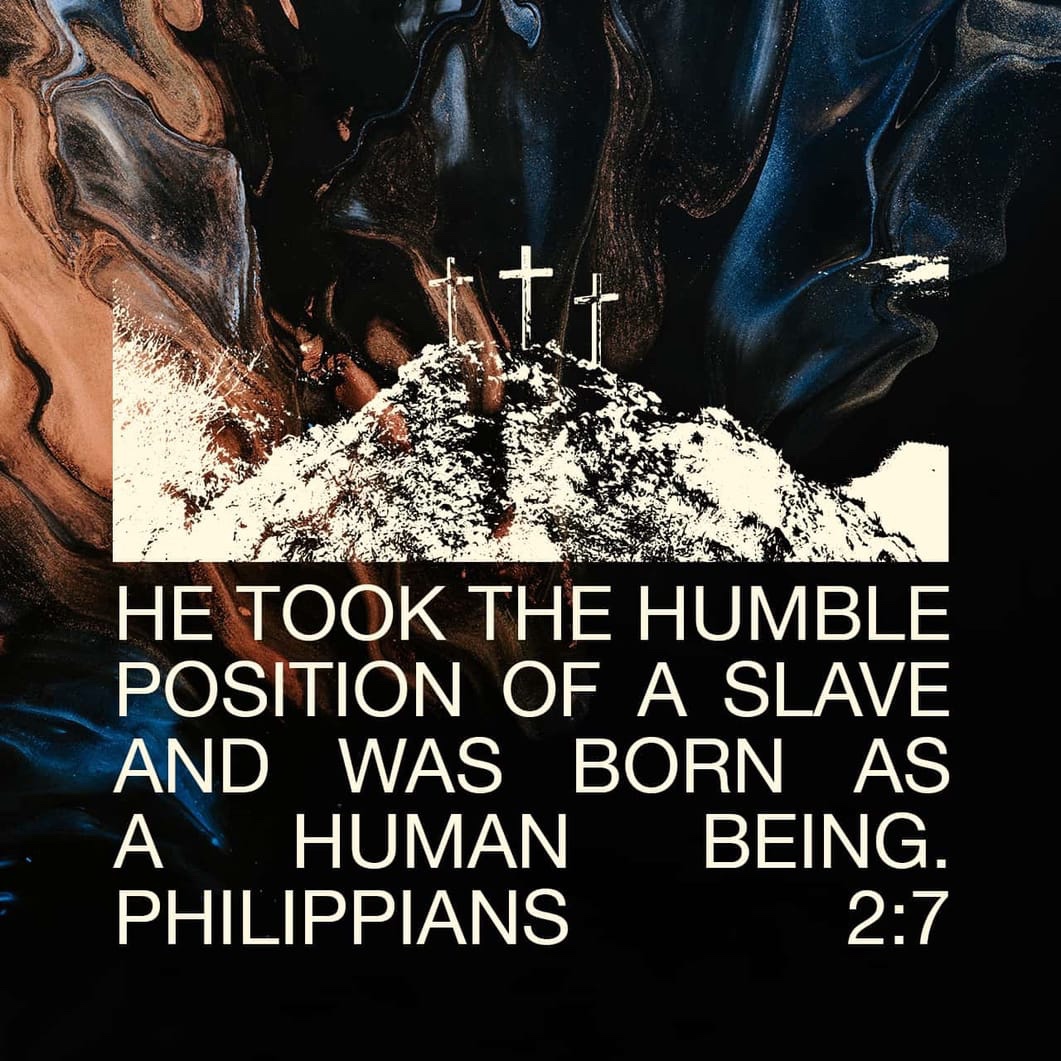
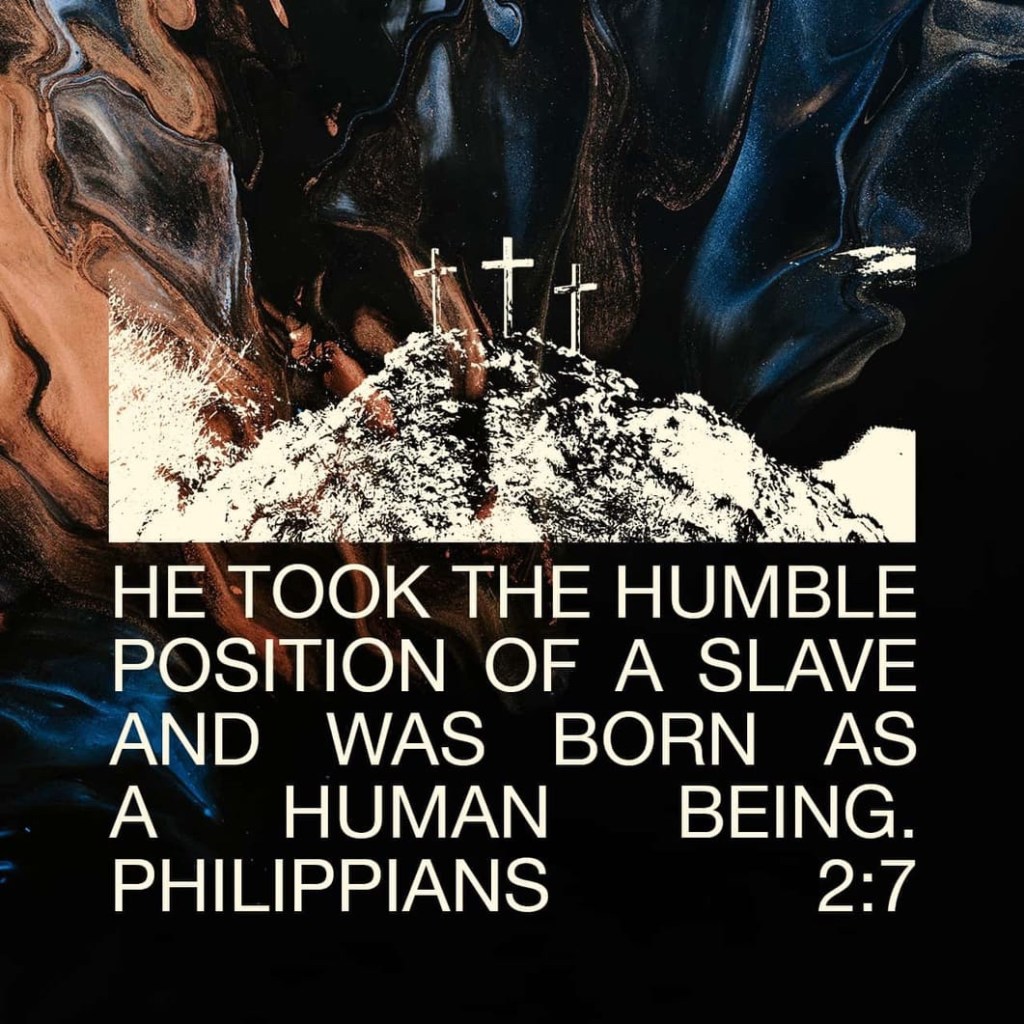
Vs 7emptied Himself. From this Gr. word comes the theological word “kenosis”; i.e., the doctrine of Christ’s self-emptying in His incarnation. This was a self-renunciation, not an emptying Himself of deity nor an exchange of deity for humanity (see notes on v. 6).
Jesus did, however, renounce or set aside His privileges in several areas:
1) heavenly glory—while on earth He gave up the glory of a face-to-face relationship with God and the continuous outward display and personal enjoyment of that glory (cf. Jn 17:5);
2) independent authority—during His incarnation Christ completely submitted Himself to the will of His Father (see note on v. 8; cf. Mt 26:39; Jn 5:30; Heb 5:8);
3) divine prerogatives—He set aside the voluntary display of His divine attributes and submitted Himself to the Spirit’s direction (cf. Mt 24:36; Jn 1:45–49);
4) eternal riches—while on earth Christ was poor and owned very little (cf. 2Co 8:9); and
5) a favorable relationship with God—He felt the Father’s wrath for human sin while on the cross (cf. Mt 27:46; see note on 2Co 5:21). form of a bond-servant. Again, Paul uses the Gr. word “form,” which indicates exact essence (see note on v.
6). As a true servant, Jesus submissively did the will of His Father (cf. Is 52:13, 14). the likeness of men. Christ became more than God in a human body, but He took on all the essential attributes of humanity (Lk 2:52; Gal 4:4; Col 1:22), even to the extent that He identified with basic human needs and weaknesses (cf. Heb 2:14, 17; 4:15). He became the God-Man: fully God and fully man.
Versions of the “Golden Rule” existed before Christ, in the rabbinic writings and even in Hinduism and Buddhism. All of them cast the rule as a negative command, such as Rabbi Hillel’s version, “What is hateful to yourself do not to someone else.” Jesus made it a positive command, enriching its meaning and underscoring that this one imperative aptly summarizes the whole gist of the ethical principles contained in the Law and the Prophets.
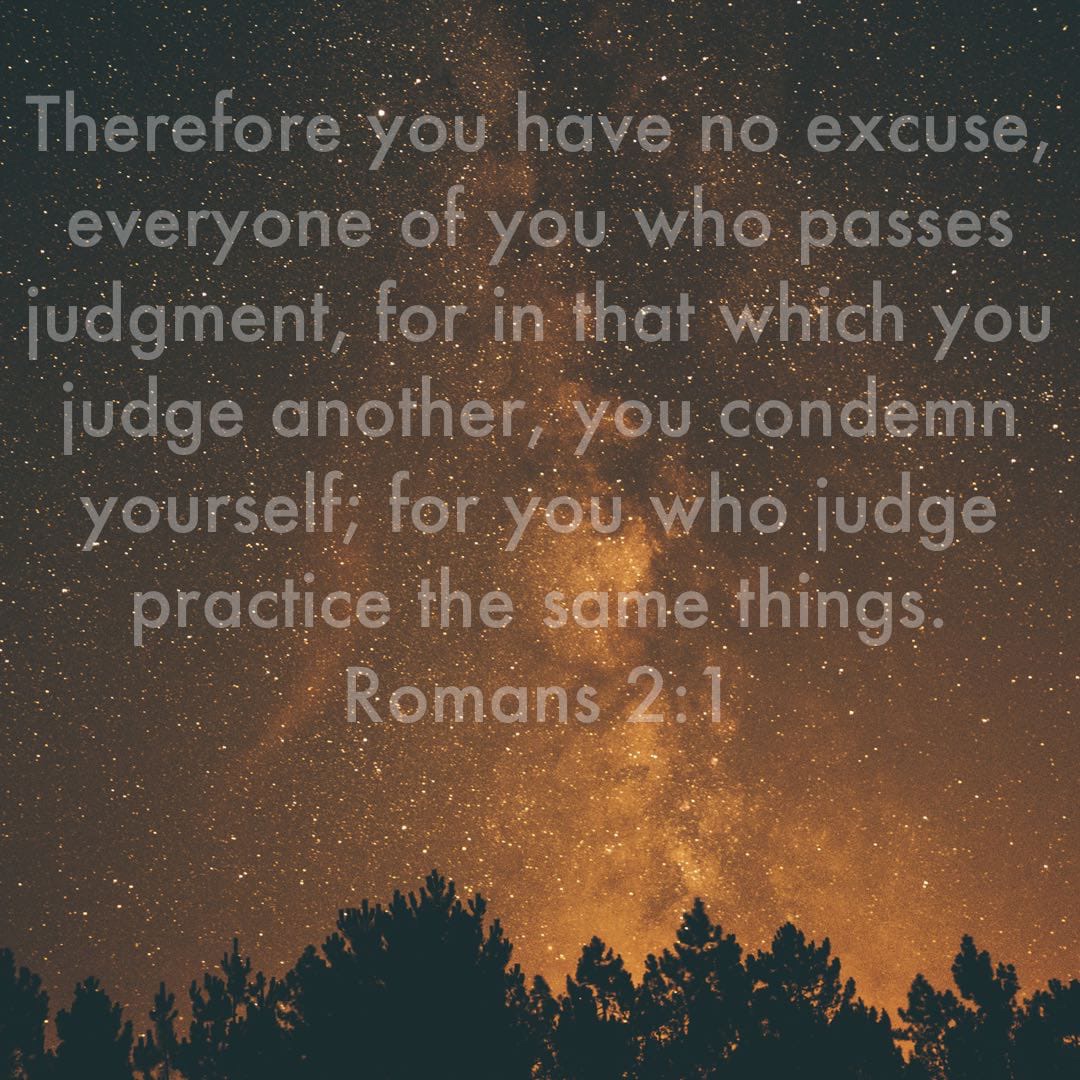
Father, may we never take lightly, that we stand guilty before you, yet through faith not in our own works, but through Jesus, sacrifice on the cross, for our sin, you have granted us life, both now, and eternally. May we never lift up our selves, higher than others. We stand guilty as they do, yet your grace sets all men right with you when they believe in Jesus. Amen and Amen.
 bible.com/bible/100/luk.6.35.NASB1995


 bible.com/bible/100/psa.77.11-12.NASB1995





 bible.com/bible/100/mat.7.12.NASB1995
 bible.com/bible/59/psa.27.14.ESV
 bible.com/bible/100/rom.2.1.NASB1995
 bible.com/bible/100/pro.22.6.NASB1995
 bible.com/bible/100/mat.6.33.NASB1995
 Living Waters