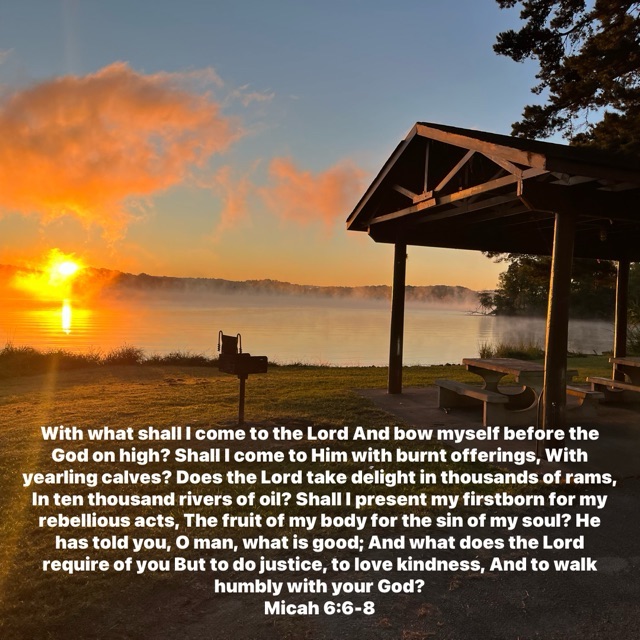
What does God require of Man? (See notes below Image)

3–5 This was the Lord’s appeal. With tenderness and emotion, the divine Plaintiff recalled His many gracious acts toward them, almost to the point of assuming the tone of a defendant. Noting their trek from bondage in Egypt to their own homeland, God had provided leadership (v. 4), reversed the attempts of Balaam to curse the people (v. 5a; cf. Nu 22–24), and miraculously parted the Jordan River (v. 5b) so they could cross over from Shittim, located E of the Jordan, to Gilgal on the W side near Jericho. God had faithfully kept all His promises to them. † 6:6, 7 Micah, as though speaking on behalf of the people, asked rhetorically how, in light of God’s faithfulness toward them, they could continue their hypocrisy by being outwardly religious but inwardly sinful. † 6:8 Micah’s terse response ( v. 8) indicated they should have known the answer to the rhetorical question. Spiritual blindness had led them to offer everything except the one thing He wanted—a spiritual commitment of the heart from which right behavior would ensue (cf. Dt 10:12–19; Mt 22:37–39). This theme is often represented in the OT (cf. 1Sa 15:22; Is 1:11–20; Jer 7:21–23; Hos 6:6; Am 5:15).
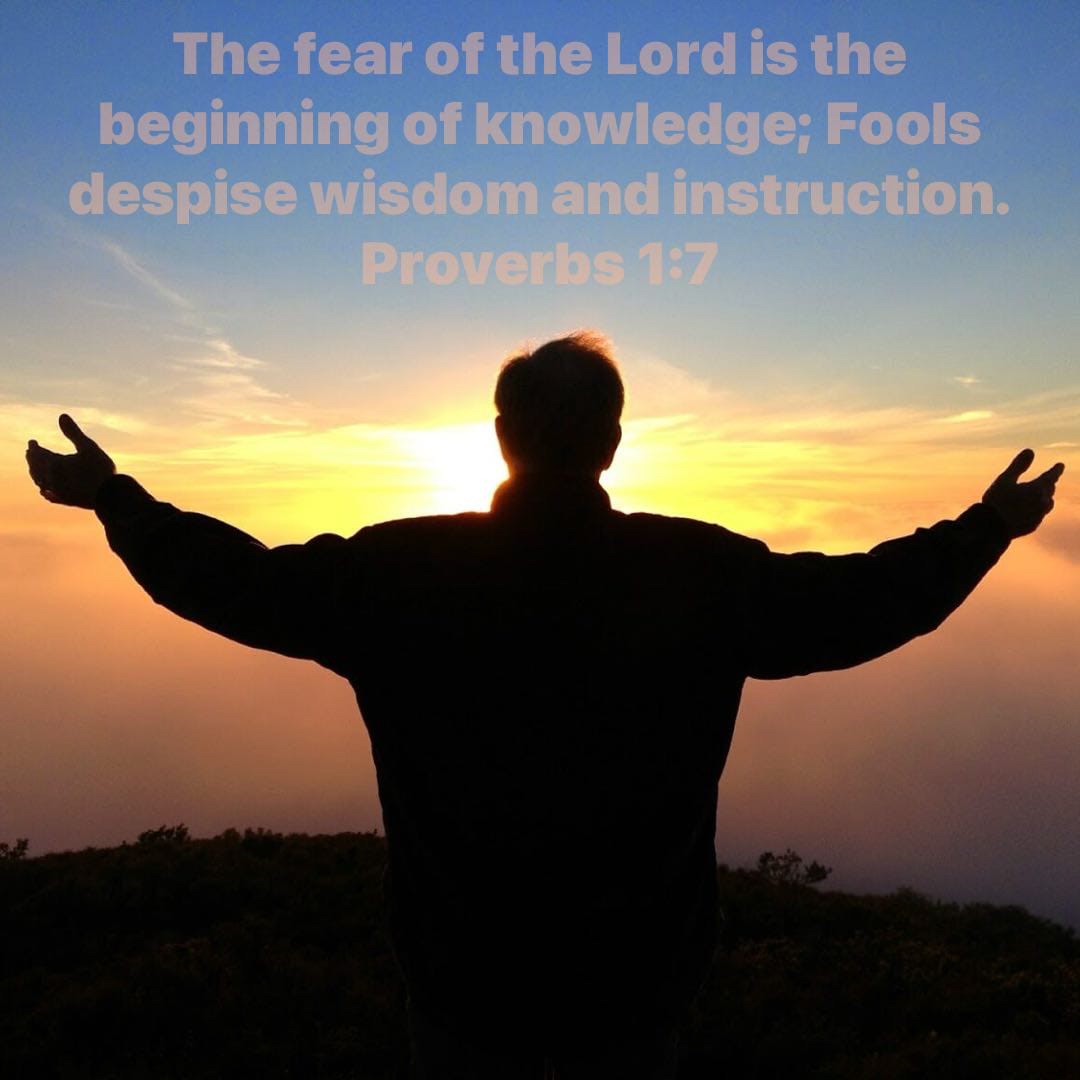
Wisdom, does not come from mere knowledge, but is given to those who know and revere God. Just because someone is smart, doesn’t mean that they are wise! (See notes below)

1:7 The fear of the LORD.

The overarching theme of this book and particularly the first 9 chapters is introduced—reverence for God (see v. 29; 2:5; 3:7; 8:13; 9:10; 14:26, 27; cf. also Job 28:28; Ps 34:11; Ac 9:31).

This reverential awe and admiring, submissive fear is foundational for all spiritual knowledge and wisdom (cf. 2:4–6; 9:10; 15:33; Job 28:28; Ps 111:10; Ecc 12:13).

While the unbeliever may make statements about life and truth, he does not have true or ultimate knowledge until he is in a redemptive relationship of reverential awe with God.

Note the progression here:

1) teaching about God;

2) learning about God;

3) fearing God;

4) knowing God; and

5) imitating God’s wisdom.

The fear of the Lord is a state of mind in which one’s own attitudes, will, feelings, deeds, and goals are exchanged for God’s (cf. Ps 42:1).

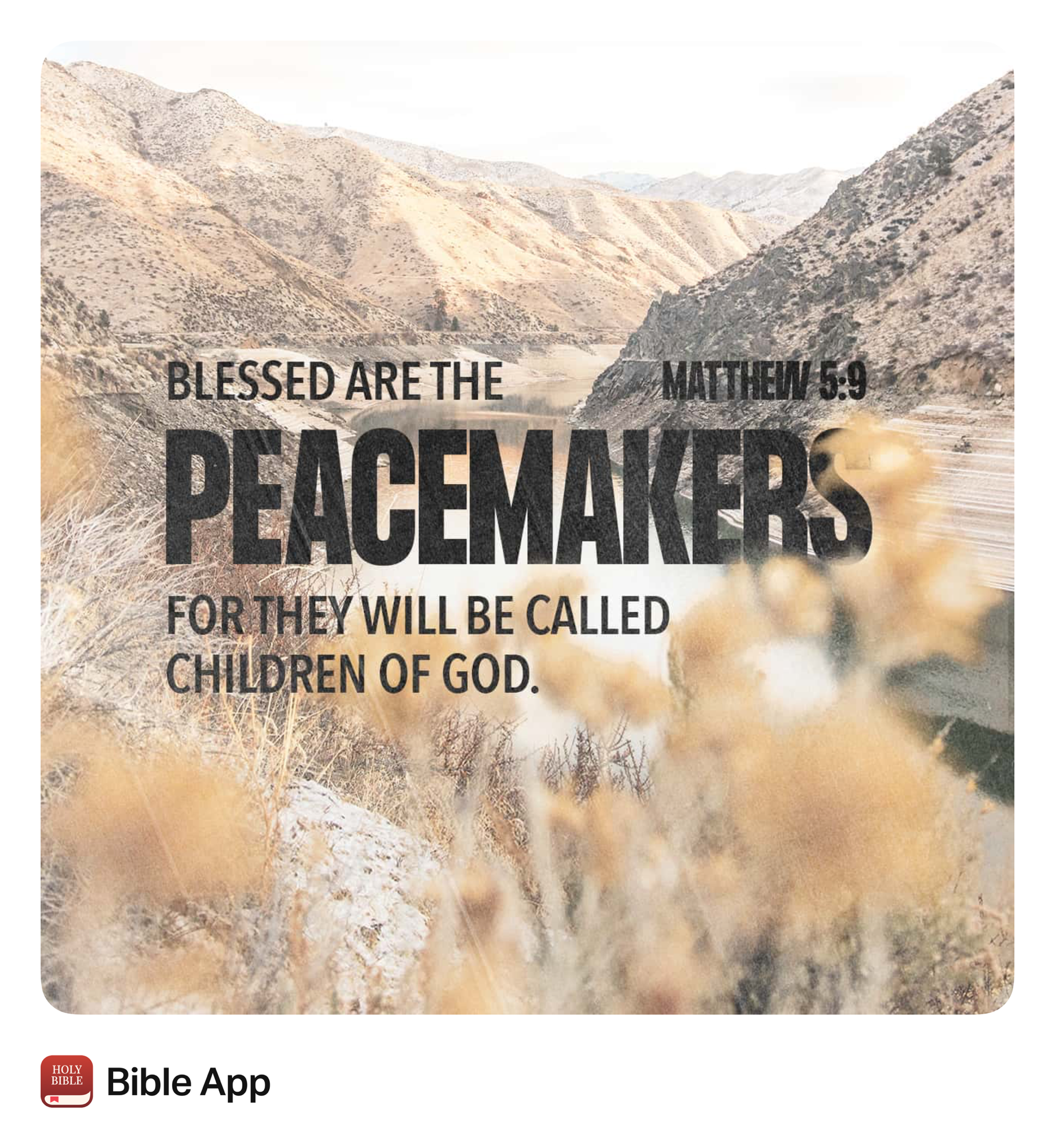
Blessed are the Peacemakers

The Battle belongs to the Lord! Help us to see the battle through your eyes, Oh Lord. The battle rages within our own hearts, and the unseen things, that surround us in this fallen world. Help us to see the Victory has already been won, both through your death and resurrection, and your promise of coming return and making all things right again. Show who you are today, and every day, as we persevere in Your Name. Amen!

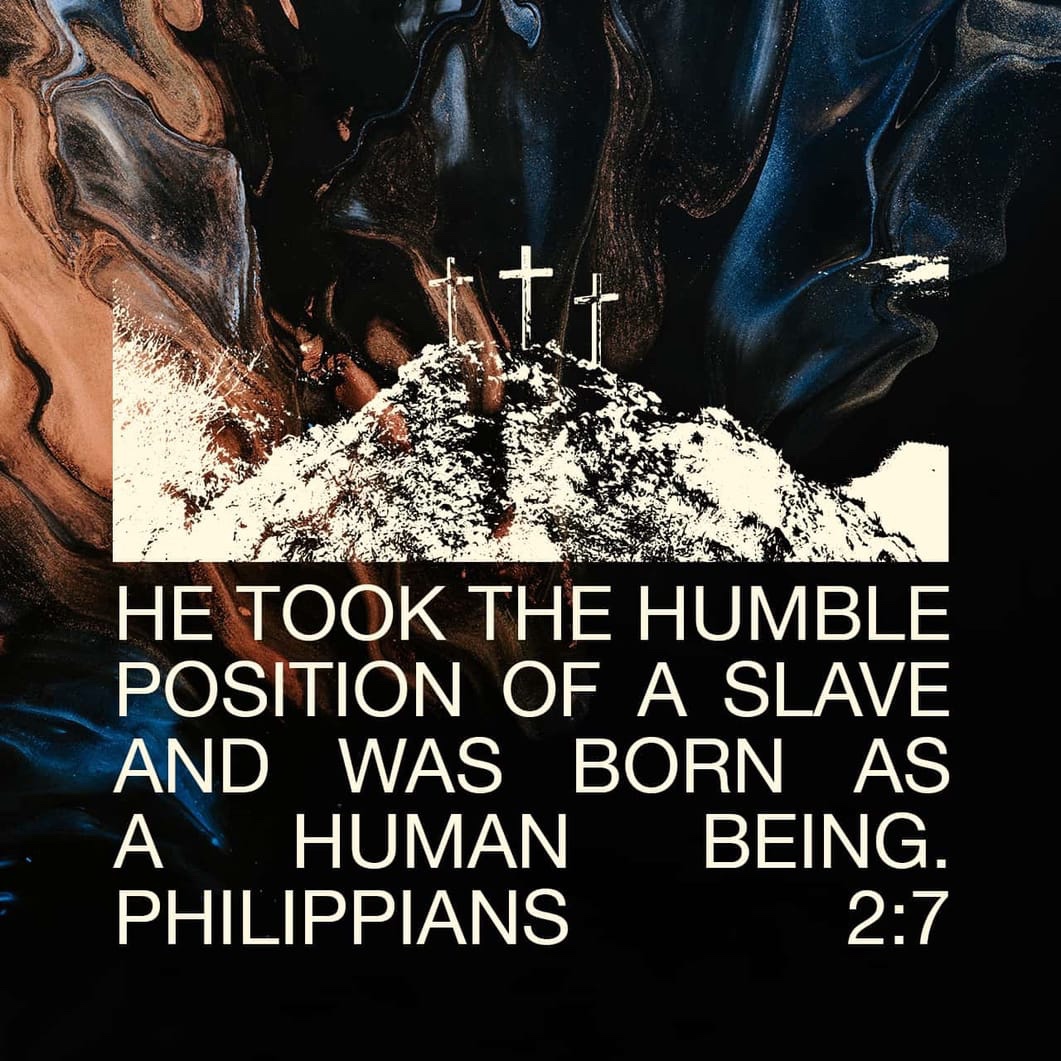
Philippians 2:7 – He took Position as a Slave

From: John MacArthur Study Bible.

Vs 7emptied Himself. From this Gr. word comes the theological word “kenosis”; i.e., the doctrine of Christ’s self-emptying in His incarnation. This was a self-renunciation, not an emptying Himself of deity nor an exchange of deity for humanity (see notes on v. 6).

Jesus did, however, renounce or set aside His privileges in several areas: 

1) heavenly glory—while on earth He gave up the glory of a face-to-face relationship with God and the continuous outward display and personal enjoyment of that glory (cf. Jn 17:5); 

2) independent authority—during His incarnation Christ completely submitted Himself to the will of His Father (see note on v. 8; cf. Mt 26:39; Jn 5:30; Heb 5:8); 

3) divine prerogatives—He set aside the voluntary display of His divine attributes and submitted Himself to the Spirit’s direction (cf. Mt 24:36; Jn 1:45–49);

4) eternal riches—while on earth Christ was poor and owned very little (cf. 2Co 8:9); and 

5) a favorable relationship with God—He felt the Father’s wrath for human sin while on the cross (cf. Mt 27:46; see note on 2Co 5:21). form of a bond-servant. Again, Paul uses the Gr. word “form,” which indicates exact essence (see note on v. 

6). As a true servant, Jesus submissively did the will of His Father (cf. Is 52:13, 14). the likeness of men. Christ became more than God in a human body, but He took on all the essential attributes of humanity (Lk 2:52; Gal 4:4; Col 1:22), even to the extent that He identified with basic human needs and weaknesses (cf. Heb 2:14, 17; 4:15). He became the God-Man: fully God and fully man.

He’ll Take Care of the Rest!!!

bible.com/bible/100/mat.6.33.NASB1995

He’ll take care of the rest!

See a fun song from the past, by Keith Green

You and I are Capable of so much more, not because of who we are, but who God is, through Jesus Christ!

“And looking at them Jesus said to them, “With people this is impossible, but with God all things are possible.””

Matthew 19:26 NASB1995

“Then He touched their eyes, saying, “It shall be done to you according to your faith.””

Matthew 9:29 NASB1995

“Now to Him who is able to do far more abundantly beyond all that we ask or think, according to the power that works within us,”

Ephesians 3:20 NASB1995

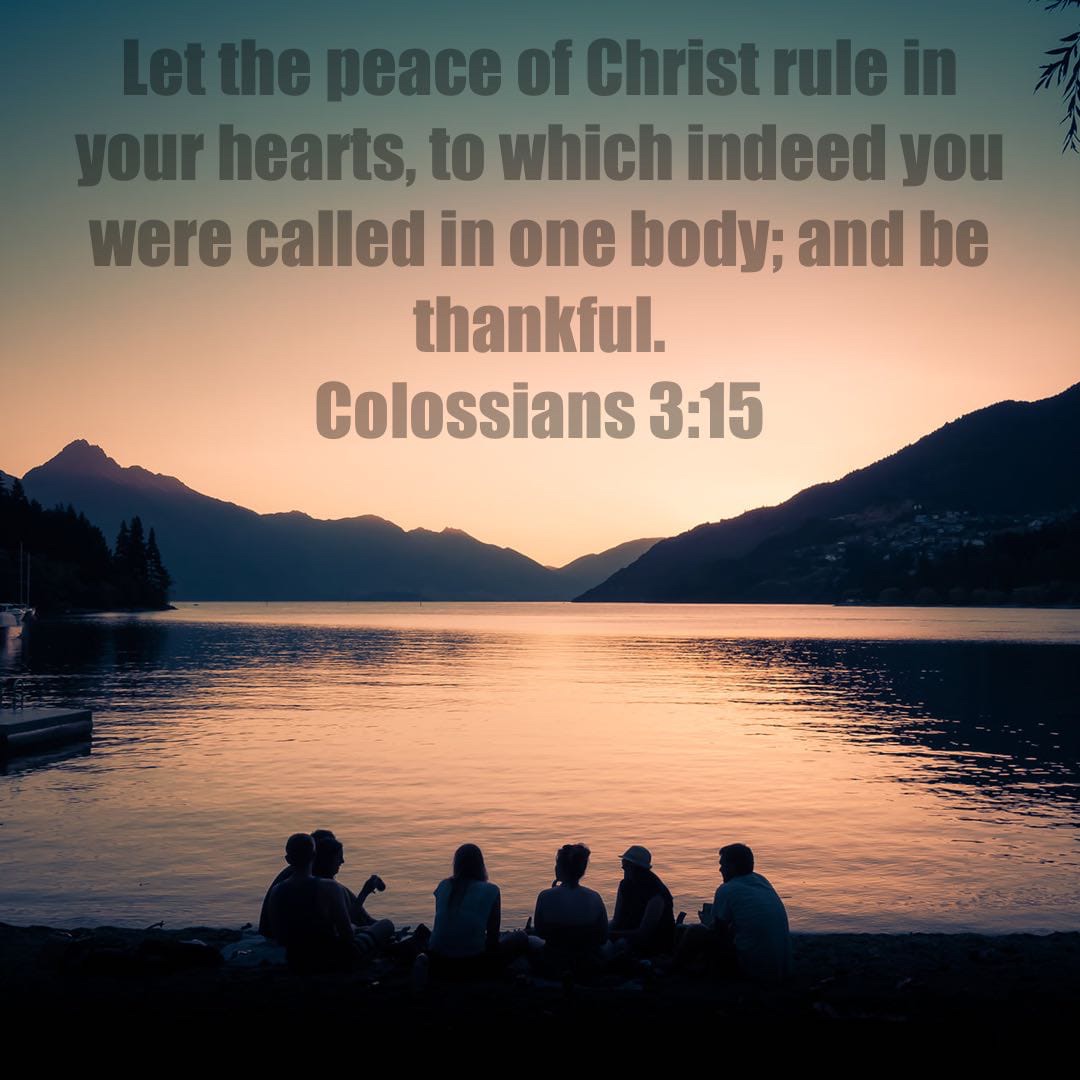
Thankfulness, a much needed gift in these troubled times.

bible.com/bible/100/col.3.15.NASB1995

What are five things you are Thankful for?

I am Thankful for Jesus, that I can talk to whenever I want.

I am Thankful for my wife of 43 years whom I would be lost without.

I am Thankful for my Children who God has made each one unique

I am Thankful for Grandchildren

I am Thankful for my Church Family whom are like Brothers & Sisters

I am Thankful for my Sisters & Brother-in-Law

I am Thankful for the Blessing of Good Friends both Near and Far.

His master said to him, ‘Well done, good and faithful slave. You were faithful with a few things, I will put you in charge of many things; enter into the joy of your master.’

bible.com/bible/100/luk.16.10.NASB1995

Taken from Bible App Devotion “Only Jesus Part Two”

Prayer:

Abba/Father, You are the supreme authority over all of life and creation. Although You have allowed humans to rule and govern themselves, you have a higher calling for us to serve your kingdom. Give me the wisdom to discern both. Help us to be salt and light in our political systems, and more importantly, show us how to be agents of your love to others. Forgive me when I place my hope and trust in man-made structures rather than in You. Continue to grow in me Your love that is patient, kind, does not envy or boast, is not proud, is not rude or self-seeking, not easily angered, keeps no record of wrongs, hates evil, delights in truth, always protects, trusts, hopes, and perseveres. Amen.