Lord, may your spirit continue to lead and guide us, in your power and strength and not our own. Help us to resist the Devil and his lies, and our own self righteous desires. Be our Rock. Amen

Lord, may your spirit continue to lead and guide us, in your power and strength and not our own. Help us to resist the Devil and his lies, and our own self righteous desires. Be our Rock. Amen


Notes from John MacArthur Study Bible
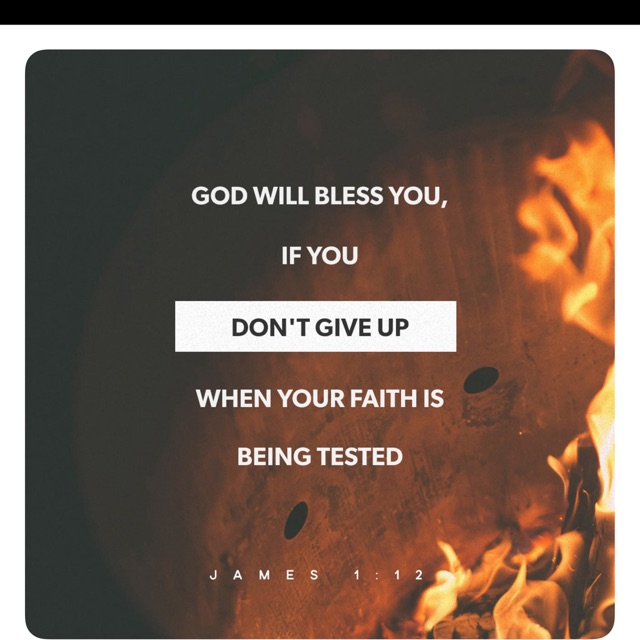
1:12 Blessed. See notes on Mt 5:4, 10, 11. Believers who successfully endure trials are truly happy (cf. 5:11). perseveres. See note on v. 3. In this context, it also describes the passive, painful survival of a trial and focuses on the victorious outcome. Such a person never relinquishes his saving faith in God; thus this concept is closely related to the doctrine of eternal security and perseverance of the believer (see note on Mt 24:13; cf. Jn 14:15, 23; 1Jn 2:5, 6, 15, 19; 4:19; 1Pe 1:6–8). trial. See note on v. 2. approved. Lit. “passed the test” (see note on v. 2, “trials”). The believer has successfully and victoriously gone through his trials, indicating he is genuine because his faith has endured like Job’s. crown of life. Best translated “the crown which is life.” “Crown” was the wreath put on the victor’s head after ancient Greek athletic events. Here, it denotes the believer’s ultimate reward, eternal life, which God has promised to him and will grant in full at death or at Christ’s coming (see notes on 2Ti 4:8; Rev 2:10; cf. 1Pe 5:4).


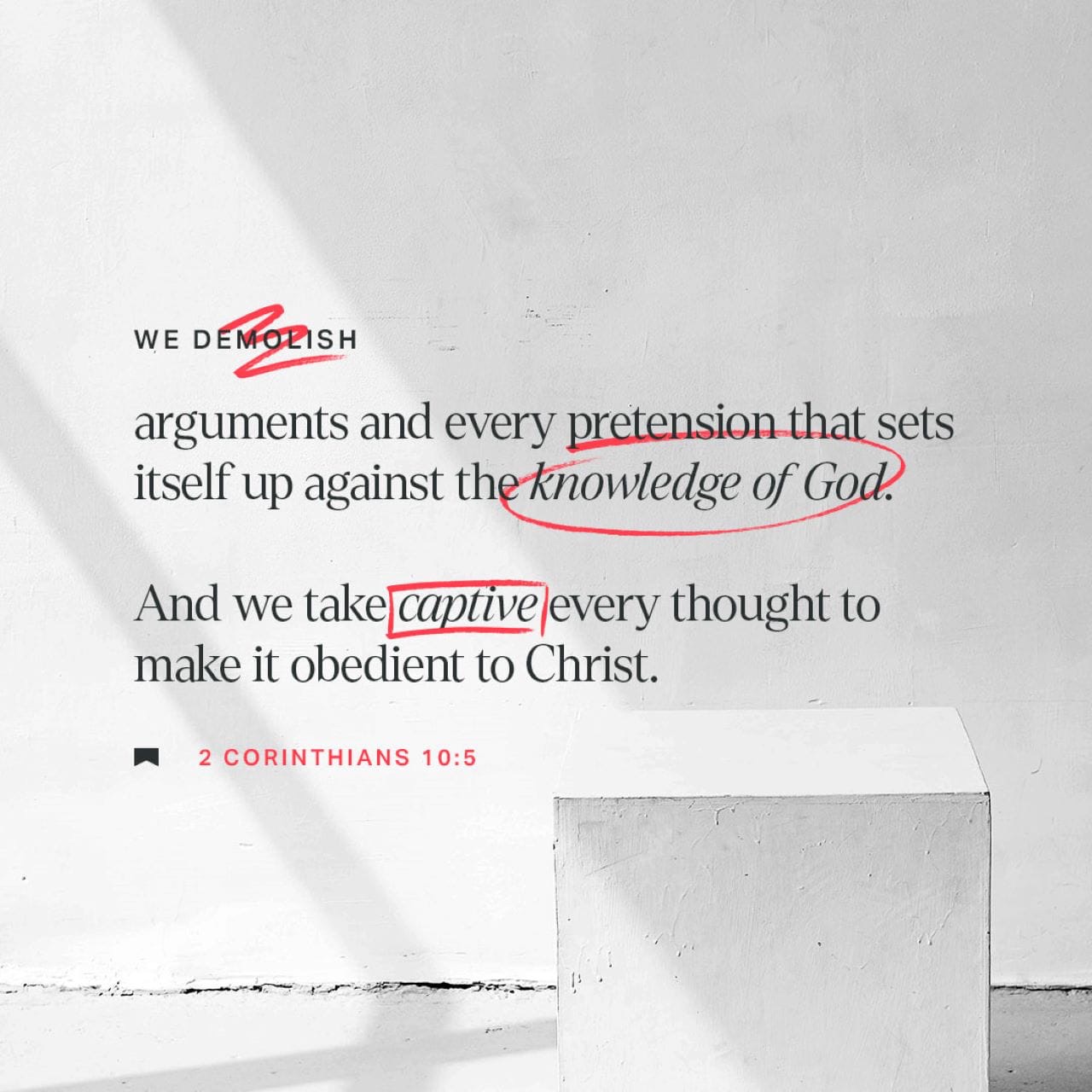
speculations. Thoughts, ideas, reasonings, philosophies, and false religions are the ideological forts in which men barricade themselves against God and the gospel (cf. 1Co 3:20). every thought captive. Emphasizes the total destruction of the fortresses of human and satanic wisdom and the rescuing of those inside from the damning lies that had enslaved them.

From: John MacArthur Study Bible.
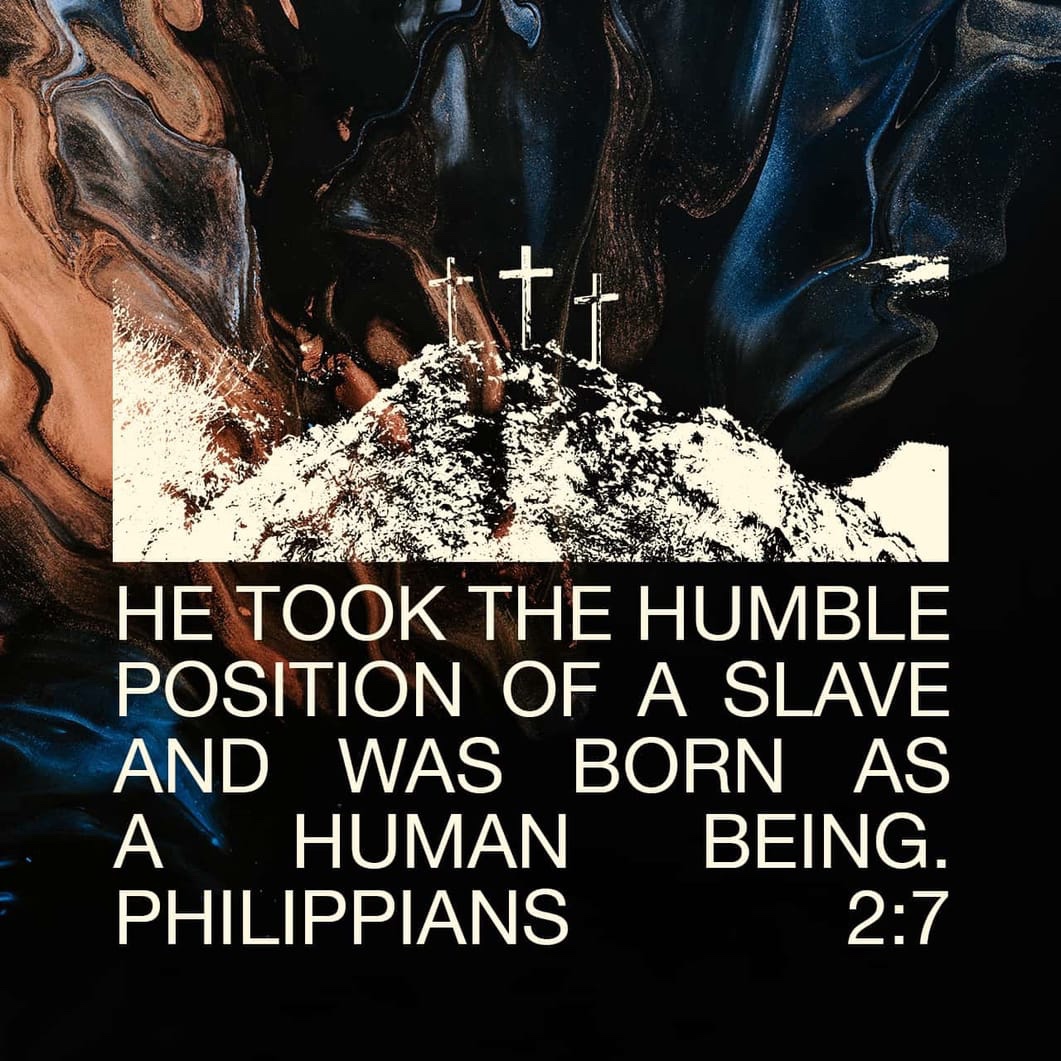
Vs 7emptied Himself. From this Gr. word comes the theological word “kenosis”; i.e., the doctrine of Christ’s self-emptying in His incarnation. This was a self-renunciation, not an emptying Himself of deity nor an exchange of deity for humanity (see notes on v. 6).
Jesus did, however, renounce or set aside His privileges in several areas:
1) heavenly glory—while on earth He gave up the glory of a face-to-face relationship with God and the continuous outward display and personal enjoyment of that glory (cf. Jn 17:5);
2) independent authority—during His incarnation Christ completely submitted Himself to the will of His Father (see note on v. 8; cf. Mt 26:39; Jn 5:30; Heb 5:8);
3) divine prerogatives—He set aside the voluntary display of His divine attributes and submitted Himself to the Spirit’s direction (cf. Mt 24:36; Jn 1:45–49);
4) eternal riches—while on earth Christ was poor and owned very little (cf. 2Co 8:9); and
5) a favorable relationship with God—He felt the Father’s wrath for human sin while on the cross (cf. Mt 27:46; see note on 2Co 5:21). form of a bond-servant. Again, Paul uses the Gr. word “form,” which indicates exact essence (see note on v.
6). As a true servant, Jesus submissively did the will of His Father (cf. Is 52:13, 14). the likeness of men. Christ became more than God in a human body, but He took on all the essential attributes of humanity (Lk 2:52; Gal 4:4; Col 1:22), even to the extent that He identified with basic human needs and weaknesses (cf. Heb 2:14, 17; 4:15). He became the God-Man: fully God and fully man.

“And looking at them Jesus said to them, “With people this is impossible, but with God all things are possible.””
Matthew 19:26 NASB1995
“Then He touched their eyes, saying, “It shall be done to you according to your faith.””
Matthew 9:29 NASB1995
“Now to Him who is able to do far more abundantly beyond all that we ask or think, according to the power that works within us,”
Ephesians 3:20 NASB1995