Hi,
My name is Alan and I have been in ministry, for many years. I started out at Grace Community Church in their sports ministries, in Softball, Basketball and Semi Pro Baseball team, where I coached, led devotions, and shared my testimony on the baseball team with other teams we played. After leaving Grace, My wife Kathy and I were at Simi Valley Community Church, where we were lay pastors, and also got involved in Parenting classes called Growing Kids God's Way. The church ended up splitting and were part of the original people that helped start Cornerstone Community Church with Francis Chan and Ron Wilson. During that time, we continued in parenting classes, couples bible studies, and small groups. I became a non staff Pastor/Elder some years back and did it till I stepped down on December 31st, 2019. Nothing bad, just felt that the Lord was calling me to do something else, after 25 years at Cornerstone. Presently, I joined a band with our Homeless Ministry (PADS) and we just started a group on Friday nights, that ministers to professing believers who are going through some type of recovery. My desire, is that there will be some type of home/small church that I will lead, based on what the Lord seems to be calling me to. It is a really big step of faith, at 65 years old.
A couple other things to note. I was born in Council Bluffs, Iowa and left there when I was 20 years old. My passion was baseball, and my desire, was to play professionally. I gave my life to Jesus when I was a young teenager, but lack of a consistent fellowship and some family problems led me away. I also, started letting baseball be my God.
I moved to California when I was 20, and works for an offshore drilling company for about 2 and 1/2 years and then went back to school and Cal State University where I met my wonderful wife in Campus Crusade for Christ (CRU). We were married in 1980 and Lord willing, look forward to celebrating our 40th anniversary in August. We have 3 daughters that all live close by, until my middle daughter just moved to Tennessee.
My Career, had been since I got out of college, with a degree in finance, a combination of IT, consulting, Executive Vice President, RE Broker and Loan Broker, and a short time as a VP Senior Financial Analyst with Bank of America.
Well, I hope that gives you a little glimpse into my life, and where I think the Lord is leading. Please feel free to write.
God Bless
Alan
“Whatever you do, do your work heartily, as for the Lord rather than for men, knowing that from the Lord you will receive the reward of the inheritance. It is the Lord Christ whom you serve.” Colossians 3:23-24 NASB1995 https://bible.com/bible/100/col.3.23-24.NASB1995
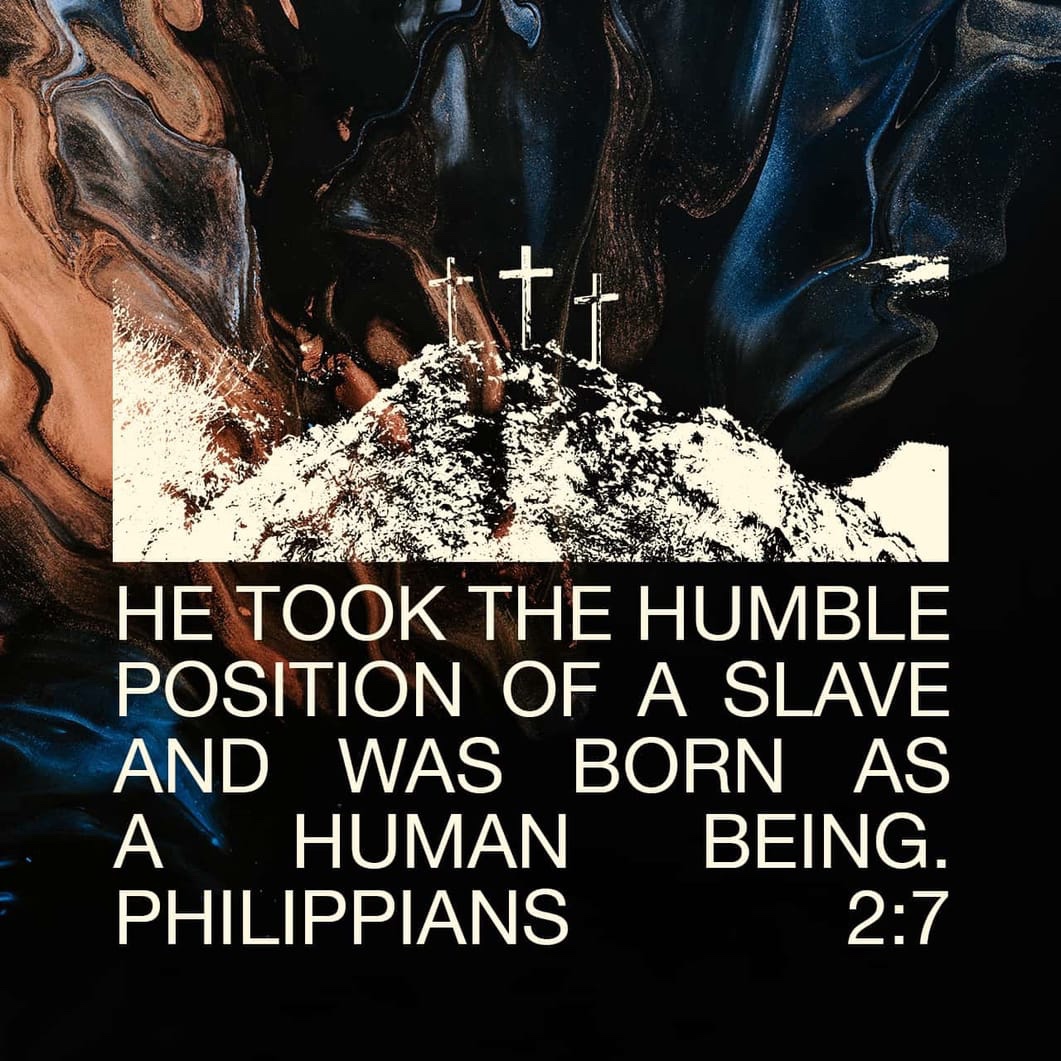
Vs 7emptied Himself. From this Gr. word comes the theological word “kenosis”; i.e., the doctrine of Christ’s self-emptying in His incarnation. This was a self-renunciation, not an emptying Himself of deity nor an exchange of deity for humanity (see notes on v. 6).
Jesus did, however, renounce or set aside His privileges in several areas:
1) heavenly glory—while on earth He gave up the glory of a face-to-face relationship with God and the continuous outward display and personal enjoyment of that glory (cf. Jn 17:5);
2) independent authority—during His incarnation Christ completely submitted Himself to the will of His Father (see note on v. 8; cf. Mt 26:39; Jn 5:30; Heb 5:8);
3) divine prerogatives—He set aside the voluntary display of His divine attributes and submitted Himself to the Spirit’s direction (cf. Mt 24:36; Jn 1:45–49);
4) eternal riches—while on earth Christ was poor and owned very little (cf. 2Co 8:9); and
5) a favorable relationship with God—He felt the Father’s wrath for human sin while on the cross (cf. Mt 27:46; see note on 2Co 5:21). form of a bond-servant. Again, Paul uses the Gr. word “form,” which indicates exact essence (see note on v.
6). As a true servant, Jesus submissively did the will of His Father (cf. Is 52:13, 14). the likeness of men. Christ became more than God in a human body, but He took on all the essential attributes of humanity (Lk 2:52; Gal 4:4; Col 1:22), even to the extent that He identified with basic human needs and weaknesses (cf. Heb 2:14, 17; 4:15). He became the God-Man: fully God and fully man.
“At that time, this song will be sung in the country of Judah: We have a strong city, Salvation City, built and fortified with salvation. Throw wide the gates so good and true people can enter. People with their minds set on you, you keep completely whole, Steady on their feet, because they keep at it and don’t quit. Depend on God and keep at it because in the Lord God you have a sure thing. Those who lived high and mighty he knocked off their high horse. He used the city built on the hill as fill for the marshes. All the exploited and outcast peoples build their lives on the reclaimed land.” Isaiah 26:1-6 MSG https://bible.com/bible/97/isa.26.1-6.MSG
Versions of the “Golden Rule” existed before Christ, in the rabbinic writings and even in Hinduism and Buddhism. All of them cast the rule as a negative command, such as Rabbi Hillel’s version, “What is hateful to yourself do not to someone else.” Jesus made it a positive command, enriching its meaning and underscoring that this one imperative aptly summarizes the whole gist of the ethical principles contained in the Law and the Prophets.
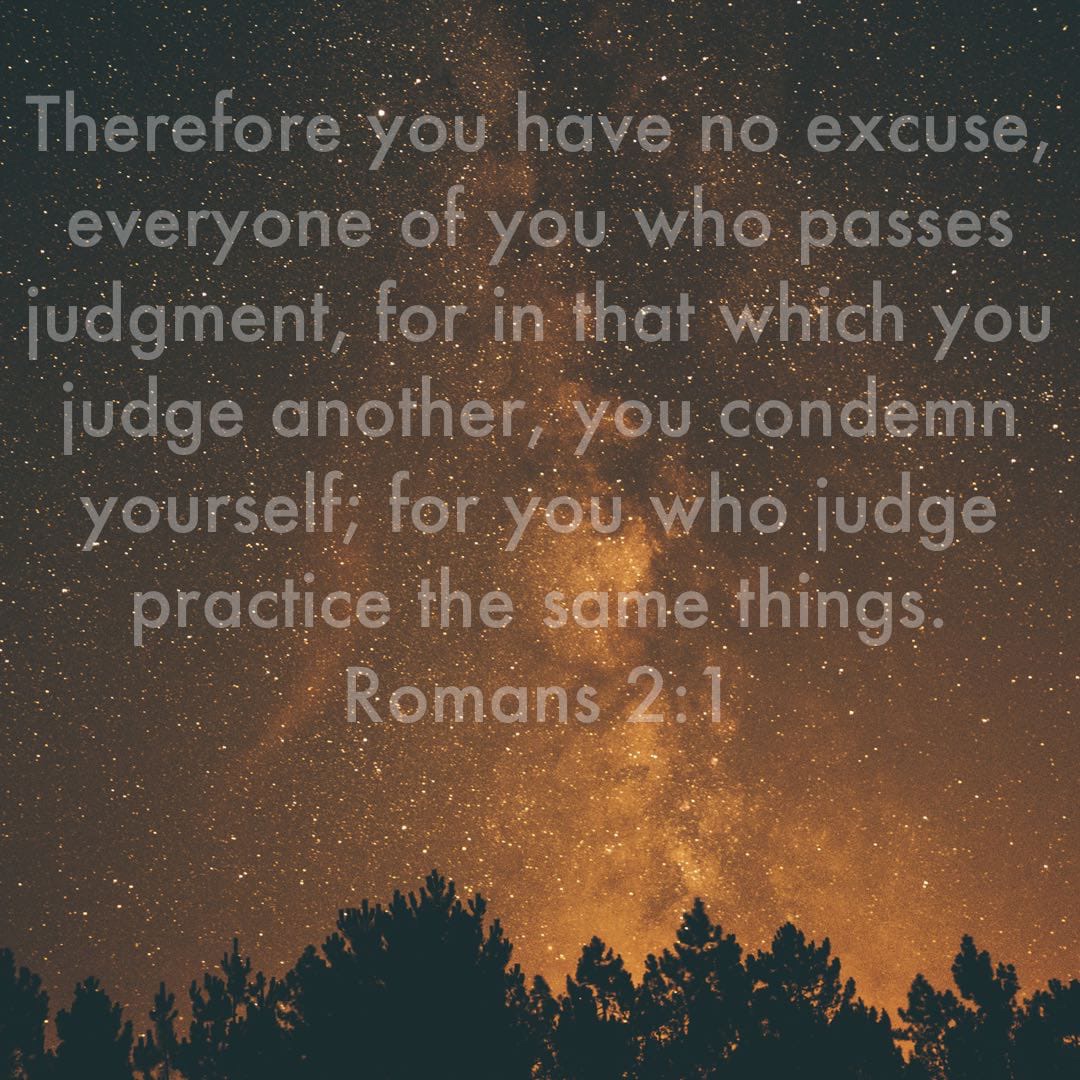
Father, may we never take lightly, that we stand guilty before you, yet through faith not in our own works, but through Jesus, sacrifice on the cross, for our sin, you have granted us life, both now, and eternally. May we never lift up our selves, higher than others. We stand guilty as they do, yet your grace sets all men right with you when they believe in Jesus. Amen and Amen.
1:9 in …knowledge. This is from the Gr. word that describes genuine, full, or advanced knowledge. Biblical love is not an empty sentimentalism but is anchored deeply in the truth of Scripture and regulated by it (cf. Eph 5:2, 3; 1Pe1:22).discernment. The Eng. word “aesthetic” comes from this Gr. word, which speaks of moral perception, insight, and the practical application of knowledge. Love is not blind, but perceptive, and it carefully scrutinizes to distinguish between right and wrong. See note on 1Th5:21, 22.
†1:10approve the … excellent. “Approve” in classical Gr. described the assaying of metals or the testing of money for authenticity (cf. Lk12:56;14:19). “Excellent” means “to differ.” Believers need the ability to distinguish those things that are truly important so they can establish the right priorities. sincere and blameless. “Sincere” means “genuine,” and may have originally meant “tested by sunlight.” In the ancient world, dishonest pottery dealers filled cracks in their inferior products with wax before glazing and painting them, making worthless pots difficult to distinguish from expensive ones. The only way to avoid being defrauded was to hold the pot to the sun, making the wax-filled cracks obvious. Dealers marked their fine pottery that could withstand “sun testing” as sine cera—”without wax.” “Blameless” can be translated “without offense,” referring to relational integrity. Christians are to live lives of true integrity that do not cause others to sin (see notes on Ro 12:9; 1Co10:31, 32; 2Co1:12; cf. Ro 14; 1Co 8). the day of Christ. See note on v. 6.
“He will restore the hearts of the fathers to their children and the hearts of the children to their fathers, so that I will not come and smite the land with a curse.”” Malachi 4:6 NASB1995







 bible.com/bible/100/mat.7.12.NASB1995
 bible.com/bible/59/psa.27.14.ESV
 bible.com/bible/100/rom.2.1.NASB1995
 bible.com/bible/100/pro.22.6.NASB1995
 bible.com/bible/100/php.1.9-10.NASB1995
 bible.com/bible/100/mat.6.33.NASB1995

 Living Waters