
Thought for the day
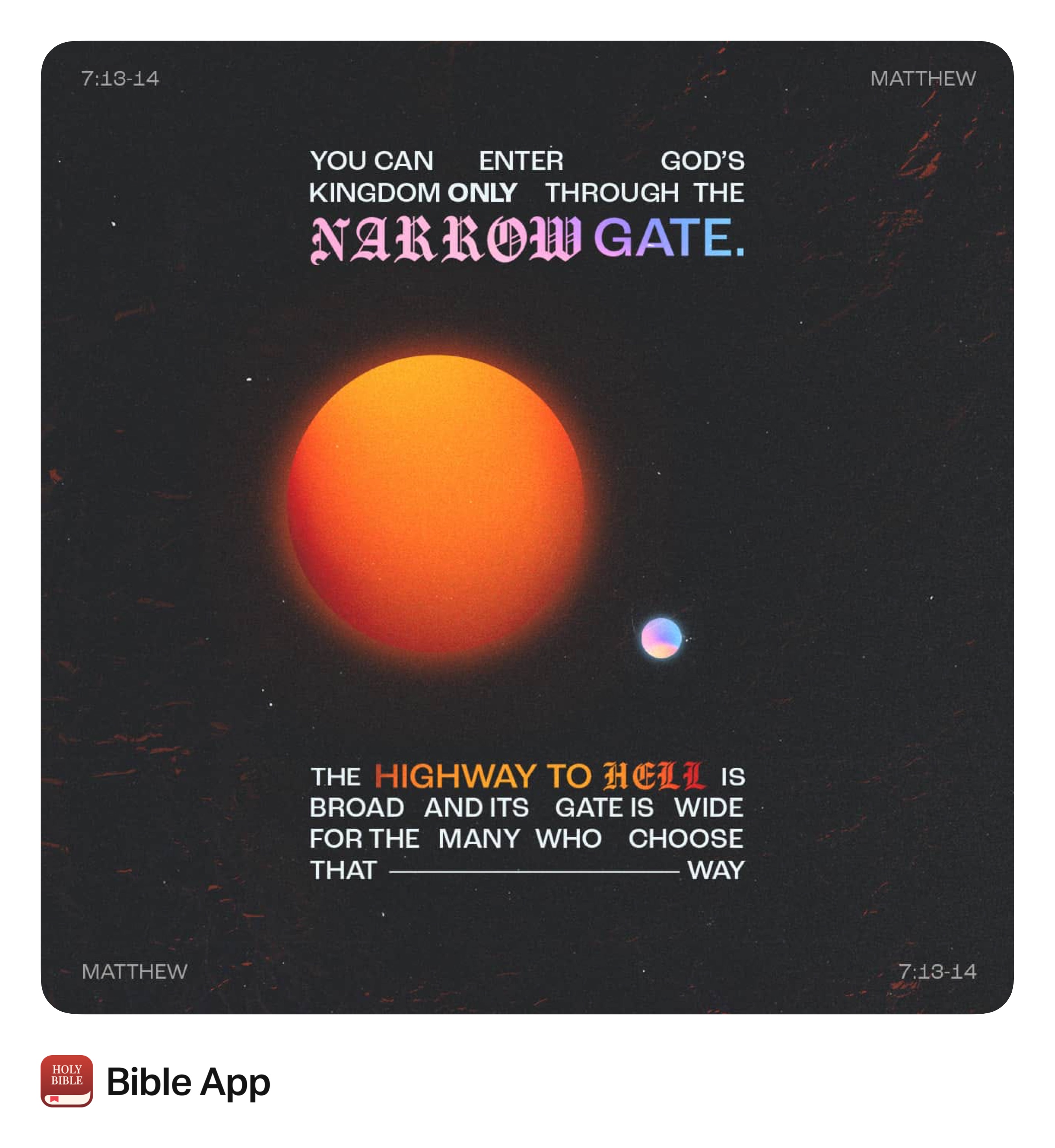

7:13, 14 Both the narrow gate and the wide gate are assumed to provide the entrance to God’s kingdom. Two ways are offered to people. The narrow gate is by faith, only through Christ, constricted and precise. It represents true salvation in God’s way that leads to life eternal. The wide gate includes all religions of works and self-righteousness, with no single way (cf. Ac 4:12), but it leads to hell, not heaven. † 7:14 way is narrow. Christ continually emphasized the difficulty of following Him (10:38; 16:24, 25; Jn 15:18, 19; 16:1–3; cf. Ac 14:22). Salvation is by grace alone, but is not easy. It calls for knowledge of the truth, repentance, submission to Christ as Lord, and a willingness to obey His will and Word. See notes on 19:16–28. † 7:15 false prophets. These deceive not by disguising themselves as sheep, but by impersonating true shepherds. They promote the wide gate and the wide way. sheep’s clothing. This may refer to the woolen attire that was the characteristic garb of a shepherd. † 7:16 You will know them by their fruits. See note on 3:8. False doctrine cannot restrain the flesh, so false prophets manifest wickedness. Cf. 2Pe 2:12–22. † 7:21 Not everyone who says … but he who does. The barrenness of this sort of faith demonstrates its real character (cf. v. 20)—the faith that says but does not do is really unbelief. Jesus was not suggesting that works are meritorious for salvation, but that true faith will not fail to produce the fruit of good works. This is precisely the point of Jas 1:22–25; 2:26.

The Battle belongs to the Lord




From: John MacArthur Study Bible
1–6 This wisdom psalm basically functions as an introduction to the entire book of Psalms. Its theme is as big as the whole Bible because it tells of people, paths, and ultimate destinations (for a significant parallel see Jer 17:5–8). By two cycles of contrast, Ps 1 separates all people into their respective spiritual categories:
I. By observation, all people are separated ethically (1:1–4)
A. A Picture of the Godly (1:1–3)
B. A Picture of the Ungodly (1:4)
II. By outcome, all people are separated judicially (1:5, 6)
A. The Failure of Ungodly People (1:5)
B. The Fruition of Lifestyles (1:6)
1. Recognition of the godly (1:6a)
2. Ruination of the ungodly (1:6b) ‡
1:1 blessed. From the perspective of the individual, this is a deep-seated joy and contentment in God; from the perspective of the believing community, it refers to redemptive favor (cf. the blessings and cursings of Dt 27:11–28:6). not walk … Nor stand … Nor sit. The “beatitude” man (cf. Mt 5:3–11) is first described as one who avoids such associations as these which exemplify sin’s sequential downward drag. †
1:2 his delight … in the law. Switching to a positive description, the spiritually “happy” man is characterized by the consistent contemplation and internalization of God’s Word for ethical direction and obedience. †
1:3 like a tree. Because of the mostly arid terrain of Israel, a lush tree served as a fitting symbol of blessing in the OT. planted. Lit. “transplanted.” Trees do not plant themselves; neither do sinful people transport themselves into God’s kingdom. Salvation is His marvelous work of grace (cf. Is 61:3; Mt 15:13). Yet, there is genuine responsibility in appropriating the abundant resources of God (cf. Jer 17:8), which lead to eventual productivity. †
1:4 The wicked are not so. This is an abrupt contrast, lit. “Not so the wicked!” chaff. A frequent OT word picture from harvest time for what is unsubstantial, without value, and worthy only to be discarded. †
1:5 Therefore … not stand. “Therefore” introduces the strong conclusion that the ungodly will not be approved by God’s judgment. †
1:6 the LORD knows. This is far more than recognition; the Lord “knows” everything. In this context, the reference is to personal intimacy and involvement with His righteous ones (contra. Mt 7:23; cf. 2Ti 2:19). the way of. The repetition of this phrase picks up on the “path” imagery so characteristic of this psalm. It refers to one’s total course of life, i.e., lifestyle. Here these two courses arrive at the ways of life and death, as in Dt 30:19; Jer 21:8; cf. Mt 7:13, 14. will perish. One day the wicked person’s way will end in ruin; a new order is coming and it will be a righteous order. So Ps 1 begins with the “blessed” and ends with those who “perish” (cf. Pss 9:5, 6; 112:10).
How do you trust God even when life isn’t fair and you suffer for no good reason? Job’s story invites us to consider what it means that God runs the world by wisdom, and how this truth can bring peace in dark times. Job is the last of the three books that explore these themes of biblical wisdom.
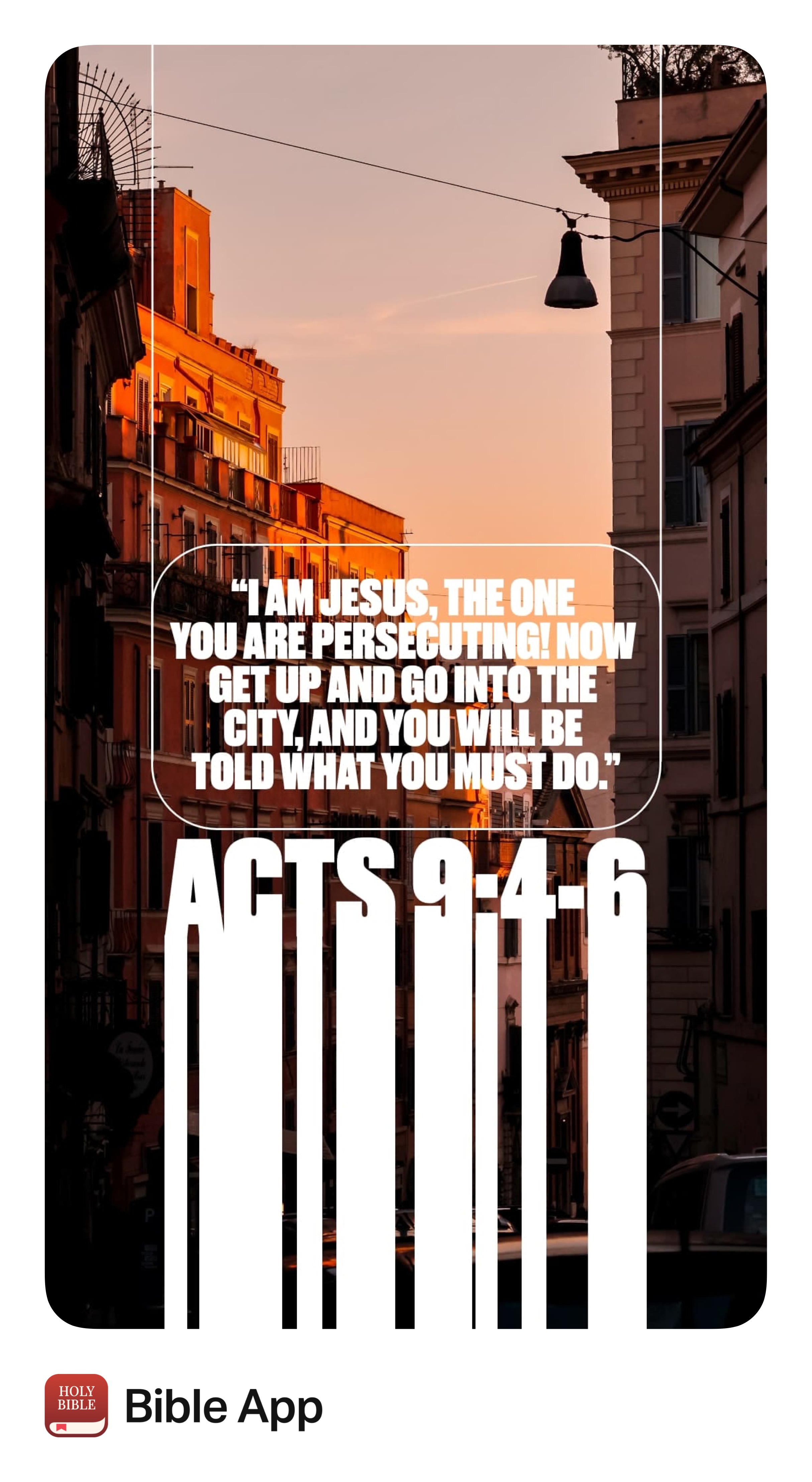

“Now Saul, still breathing threats and murder against the disciples of the Lord, went to the high priest, and asked for letters from him to the synagogues at Damascus, so that if he found any belonging to the Way, both men and women, he might bring them bound to Jerusalem. As he was traveling, it happened that he was approaching Damascus, and suddenly a light from heaven flashed around him; and he fell to the ground and heard a voice saying to him, “Saul, Saul, why are you persecuting Me?” And he said, “Who are You, Lord?” And He said, “I am Jesus whom you are persecuting, but get up and enter the city, and it will be told you what you must do.””
Acts 9:1-6 NASB1995
The Book of Zephaniah: An animated story from “The Bible Project”
The Final Decades of the Southern Kingdom
